


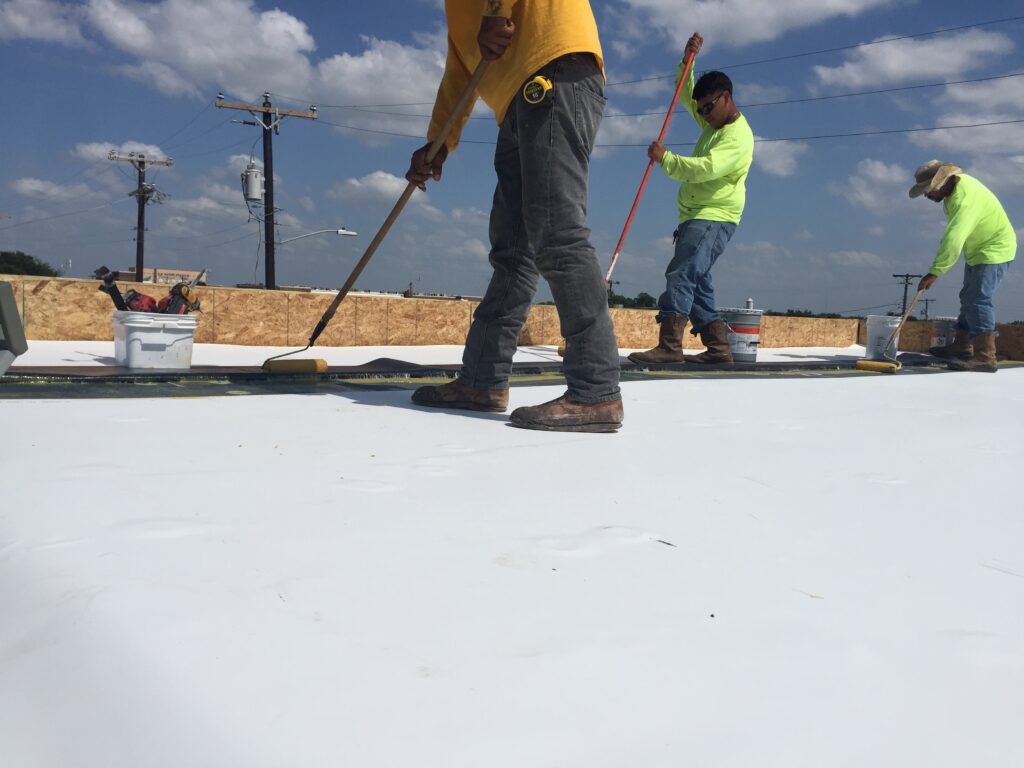
Identifying and fixing common issues in commercial flat roofs is crucial for maintaining the integrity and longevity of the building. One common issue is leaks, which can often be detected by water stains on the ceiling or walls, or pooling water on the roof’s surface. Another issue is punctures or tears in the roofing membrane, which can occur due to foot traffic, weathering, or debris. Inspecting the roof regularly for these signs of damage is key to catching problems early.
In some cases, it may be necessary to enlist the help of professional roofing contractors to ensure repairs are done correctly and effectively. Flat roof maintenance for commercial and proactive repairs are essential for keeping commercial flat roofs in optimal condition and avoiding costly damage in the long run.
What are Commercial Flat Roofs?
A flat roof, despite its name, isn’t completely flat. It has a slight pitch to allow for water drainage. These roofs are built with a variety of materials, including bitumen, PVC, TPO, and EPDM, each offering different benefits. Their structure typically involves a layer of insulation topped with a waterproof membrane.
Benefits of Flat Roofs for Commercial Buildings
Flat roofs are favored in commercial buildings for several reasons. Regular flat roof maintenance for commercial provide extra space for HVAC systems, offer a modern aesthetic, and are generally easier and safer to inspect and maintain than pitched roofs.
Common Issues in Commercial Flat Roofs
Water Pooling
Water pooling, or ponding, occurs when water collects in puddles on the roof surface. This can happen due to poor drainage, insufficient pitch, or obstructions. Over time, standing water can degrade the roofing material, leading to leaks and structural damage.
Membrane Punctures
Flat roofs are prone to punctures from foot traffic, fallen debris, or sharp objects. Even small punctures can lead to significant water damage if not addressed promptly. These punctures compromise the waterproofing layer, allowing water to seep into the underlying materials and the building’s structure.
Blistering
Blistering occurs when air or moisture gets trapped under the roofing membrane, causing bubbles. This can weaken the roof’s integrity over time, making it more susceptible to further damage from weather conditions and physical stress.
Flashing Damage
Flashing is used to seal edges and joints on the roof. When damaged, it can lead to leaks and water infiltration. Flashing is particularly vulnerable at roof penetrations, such as around vents, skylights, and chimneys.
Poor Installation
Improper installation can lead to a host of problems, including leaks, reduced lifespan, and more frequent repairs. Poor installation might involve incorrect membrane placement, inadequate sealing of seams, or improper flashing installation.
Identifying Issues in Commercial Flat Roofs
Regular Inspections
Conducting regular inspections is key to catching issues early. It’s recommended to inspect your flat roof at least twice a year and after major storms. Regular flat roof maintenance for commercial use helps identify potential problems before they escalate into significant damage.
Signs of Damage to Look For
Look for standing water, visible punctures, blisters, cracks in the membrane, and any signs of flashing damage. Discoloration or water stains on the ceiling inside the building can also indicate roof issues. Additionally, check for loose or missing roofing materials and any signs of mold or mildew growth.
Water Pooling
Causes
Water pooling can be caused by inadequate drainage systems, clogged gutters, or an insufficient slope on the roof. Structural issues, such as sagging areas, can also contribute to water pooling.
Consequences
If not addressed, standing water can lead to membrane degradation, leaks, and structural damage to the building. Prolonged water exposure can also promote the growth of mold and algae, which can further deteriorate the roofing material.
How to Fix It
Ensure that drains and gutters are clear of debris. If the pooling is due to an insufficient slope, you might need to re-pitch the roof or install additional drainage solutions. Installing tapered insulation can also help improve drainage by creating a slight slope.
Membrane Punctures
Causes
Common causes include foot traffic, falling branches, or tools dropped on the roof. Wildlife, such as birds and rodents, can also cause punctures.
Identifying Punctures
Regularly inspect the roof for visible holes or puncture marks. Pay extra attention to high-traffic areas and places where debris tends to accumulate.
Repair Methods
Small punctures can often be patched with a compatible roofing material. For larger punctures, you might need a professional to replace sections of the membrane. Ensure the repair material is compatible with the existing membrane to prevent further issues.
Blistering
Causes
Blistering is usually caused by trapped air or moisture under the membrane. This can result from improper installation or aging of the roofing material. Temperature fluctuations can also contribute to blister formation.
Signs of Blistering
Look for raised areas or bubbles on the roof surface. Blisters may vary in size and can sometimes be felt as soft spots when walking on the roof.
Repair Techniques
Blisters can sometimes be repaired by carefully cutting the bubble, allowing it to dry, and then patching it. In severe cases, a professional may need to replace sections of the membrane. Ensuring proper ventilation and using high-quality materials can help prevent future blistering.
Flashing Damage
What is Flashing?
Flashing is material used to seal roof edges, joints, and any areas where the roof surface intersects with other surfaces. It’s typically made of metal, rubber, or plastic.
Common Causes of Damage
Flashing can be damaged by weather, poor installation, or physical impact. Corrosion and deterioration over time can also weaken flashing.
Flat Roof Maintenance For Commercial Repair and Tips
Inspect flashing regularly and repair any damage with sealant or replacement flashing. Ensure that it is properly sealed to prevent leaks. Using high-quality flashing materials and proper installation techniques can extend the lifespan of the flashing.
Poor Installation
How to Identify Poor Installation
Signs of poor installation include frequent leaks, visible seams, and irregularities in the roofing material. You might also notice areas where the membrane is not properly adhered to the substrate.
Long-Term Effects
Improper installation can reduce the roof’s lifespan and increase maintenance costs. It can also lead to frequent and recurring issues that require costly repairs.
Solutions
If poor installation is detected, it might be necessary to hire a professional to correct the issues. This could involve resealing seams, improving drainage, or even replacing sections of the roof. Ensuring that the installation is done by experienced professionals can prevent future problems.
Preventive Maintenance Tips
Regular Cleaning
Keep the roof surface clean of debris, leaves, and dirt to prevent clogs and damage. Regular cleaning can also prevent the growth of mold and algae.
Gutter Maintenance
Ensure gutters and downspouts are clear to allow proper water drainage. Regularly check for and remove any obstructions.
Professional Inspections
Hire professionals for regular inspections to catch and address issues early. Professional inspections can identify hidden problems that might not be visible during a casual inspection.
Seasonal Maintenance Tips
Winter Preparation
Check for and repair any damage before the first snowfall. Ensure that drainage systems are clear to prevent ice dams. Adding insulation can help prevent heat loss and reduce the risk of ice formation.
Summer Care
Inspect the roof for any damage caused by harsh winter conditions. Ensure that the membrane is intact and free of punctures or blisters. Check for signs of UV damage and consider applying a protective coating if necessary.
Hiring a Professional
When to Call a Pro
For major repairs, extensive damage, or if you’re unsure about the condition of your roof, it’s best to hire a professional. Professionals have the tools and expertise to handle complex issues safely and effectively.
What to Look for in a Roofing Contractor
Look for contractors with good reviews, proper licensing, and insurance. Experience with commercial flat roofs is a must. Ask for references and check their previous work to ensure quality and reliability.
DIY Maintenance
Basic Maintenance Tasks You Can Do
You can perform basic tasks such as clearing debris, checking for visible damage, and ensuring gutters are clean. Regularly check for signs of wear and tear and address minor issues promptly.
Safety Tips
Always prioritize safety. Use proper gear, avoid working in extreme weather, and never work alone. Ensure you have a secure footing and use safety harnesses if necessary.
Cost of Flat Roof Maintenance
Budgeting for Maintenance
Plan for regular maintenance in your annual budget. This can help prevent costly repairs down the line. Regular maintenance can also extend the lifespan of your roof, providing long-term savings.
Cost-Effective Solutions
Routine inspections and minor repairs can save money in the long run by preventing major damage. Investing in high-quality materials and professional installation can also reduce maintenance costs over time.
Regular maintenance of your commercial flat roof is essential for its longevity and functionality. By understanding common issues and addressing them promptly, you can avoid costly repairs and extend the life of your roof. Remember, when in doubt, it’s always best to consult with a professional to ensure your roof remains in top condition.
