


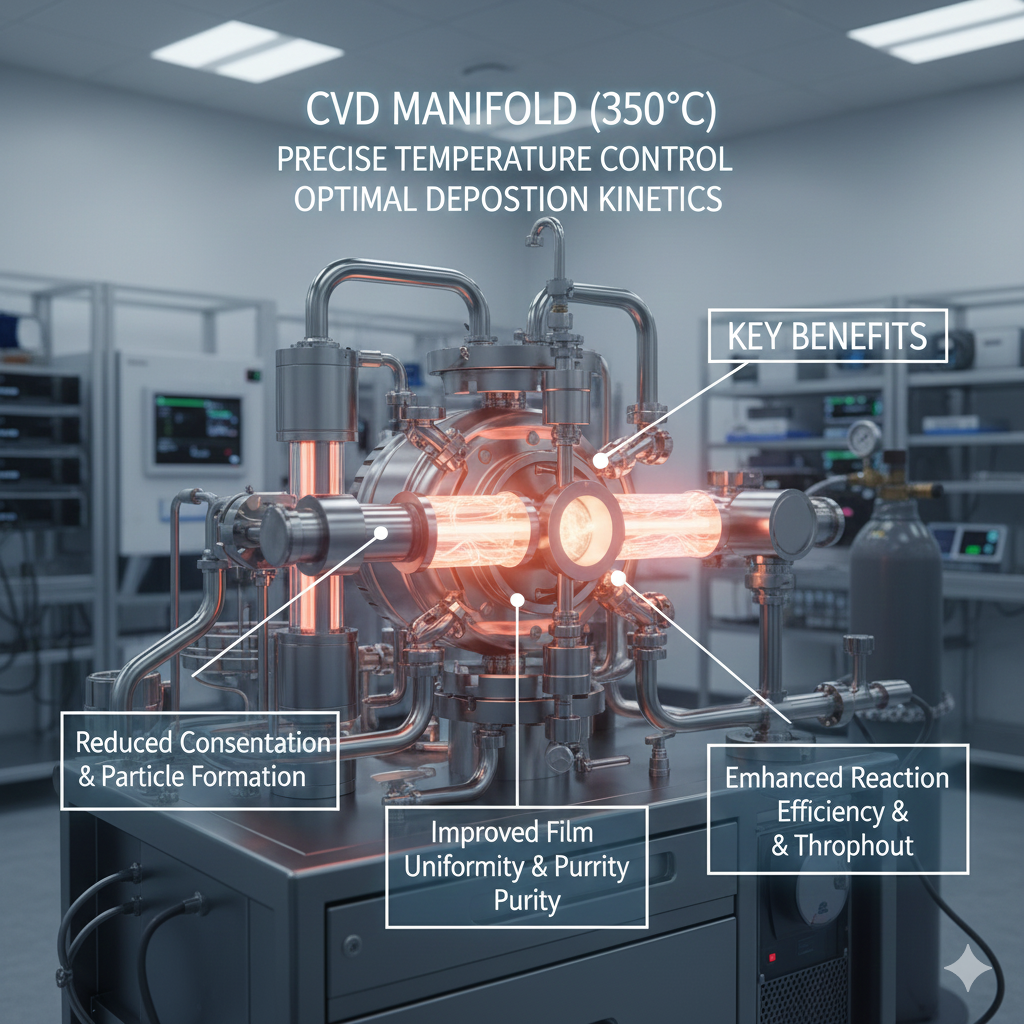
In modern semiconductor manufacturing, chemical vapor deposition (CVD) plays a vital role in forming thin, high-quality films. One question often asked by engineers and students alike is why the CVD manifold is kept hot.
The answer lies in how gases behave before they reach the deposition chamber. The gas manifold, which is part of the CVD gas delivery system, must maintain a stable temperature to ensure smooth, reliable operation. If not properly heated, issues like precursor condensation, uneven gas flow, and process instability can occur. Understanding why a CVD manifold is kept hot helps improve deposition quality, process control, and overall system performance.
What Is CVD and Why Temperature Matters
Chemical vapor deposition (CVD) is a process used to create thin solid films on a surface by reacting precursor gases at elevated temperatures. These reactions depend heavily on precise temperature control.
If temperatures are too low, gases may not react properly; if too high, unwanted reactions can occur. This is why heat management is essential throughout the entire CVD process, not just inside the chamber. Proper temperature control ensures stable gas behavior, prevents condensation, and supports consistent, high-quality film growth.
Understanding the CVD Manifold System
The CVD manifold is a key part of the gas delivery system that directs precursor gases from their sources to the deposition chamber. Its main role is to distribute gases evenly and at controlled flow rates.
Because these gases can be sensitive to temperature changes, the manifold temperature must remain stable. Keeping the CVD gas manifold heated helps prevent condensation, reduces pressure fluctuations, and ensures uniform gas flow. This stability is essential for achieving consistent deposition and reliable process performance.
Primary Reasons the Manifold Is Kept Hot

The CVD manifold is kept hot mainly to keep gases in the right state before they enter the chamber. Heating the gas manifold helps prevent precursor condensation, which can block gas lines and disrupt flow.
A stable manifold temperature also keeps gases reactive and ensures uniform gas delivery. By avoiding cold spots, manifold heating reduces clogging, contamination, and pressure changes. Overall, a heated manifold supports better process stability, consistent deposition quality, and improved yield in the CVD process.
How the Manifold Is Heated
In most CVD systems, the manifold is heated using controlled and reliable methods. Common techniques include electrical trace heaters, heating jackets, and insulated gas lines wrapped around the CVD gas manifold.
Temperature sensors and controllers are used to maintain a steady manifold temperature and avoid cold spots. This controlled heating prevents precursor condensation and keeps gases flowing smoothly. Proper heating design ensures safe operation, stable gas delivery, and consistent performance throughout the chemical vapor deposition process.
Typical Temperature Settings
The CVD manifold is usually kept at a moderately elevated temperature to prevent precursor condensation while ensuring safe gas handling. Typical manifold temperature ranges vary depending on the precursor gases used, often between 35 °C and 75 °C. This is lower than the deposition chamber but high enough to maintain uniform gas flow and reactivity. Properly controlled manifold heating helps achieve consistent deposition, reduces clogging risks, and ensures stable CVD process performance, supporting high-quality film growth.
Real-World Examples
In semiconductor manufacturing, many CVD systems rely on a heated manifold to maintain stable precursor gases. For example, in processes using TEOS or other sensitive chemicals, keeping the gas manifold hot prevents condensation that could block lines or disrupt flow.
Similarly, in metal-organic CVD, manifold temperature control ensures consistent deposition quality across wafers. These real-world applications show how manifold heating is essential for smooth gas delivery, reliable reactions, and maintaining high process yield in CVD systems.
FAQs
Is the CVD manifold hotter than the deposition chamber?
No, the manifold temperature is usually lower than the chamber. It’s heated just enough to prevent precursor condensation and maintain uniform gas flow.
What happens if the manifold isn’t heated?
Cold manifolds can cause gas condensation, blockages, uneven flow, and inconsistent deposition, reducing process stability and film quality.
Do all CVD systems keep the manifold hot?
Most systems handling sensitive precursors use manifold heating, but simpler or low-temperature processes may not require it.
Can overheating the manifold cause problems?
Yes, excessive heat can trigger premature gas reactions, material degradation, or safety risks.
Does manifold heating improve wafer yield?
Maintaining a stable manifold temperature supports consistent deposition and helps achieve higher yield in CVD processes.
